
Anchorage, Alaska · the leverage ladder
How to Scale a Rental Portfolio in Anchorage
I'm Slavik Lund, a mortgage broker with First Rate Financial and a real estate investor here in Anchorage. Scaling a rental portfolio in Alaska comes down to one sequence: buy a 2 to 4 unit building with the smallest down payment you qualify for, live in it for a year, keep it as a rental, and do it again. Then you let the rent and the equity pay for the next one. This is exactly how I built mine and how I map it out for clients.
Last update: October 15, 2026
the short answer
how to scale a rental portfolio in Anchorage
Six moves, in this order. Each building makes the next one easier to buy.
- House hack a 2 to 4 unit building. Use FHA (3.5% down), VA (0% down if you're eligible) or conventional (as low as 5% down on an owner-occupied 2 to 4 unit). Live in one unit, rent the rest.
- Live there 12 months, then move up. After a year of owner-occupancy you can move out, keep the building as a rental, and buy the next one owner-occupied with a different program.
- Let the rent qualify you. Once a building has rental history, lenders typically count 75% of the rent as income. That's what makes the second and third building easier to buy than the first.
- Recycle your equity. As tenants pay down the loan and the building gains value, a HELOC or a cash-out refinance can fund the next down payment instead of your savings.
- Switch to investor loans when you run out of owner-occupied moves. Conventional investment loans and DSCR loans (qualified on the building's rent, not your W-2) keep the ladder going.
- Keep the buildings. Every building you hold keeps paying you four ways. Selling resets the clock. Trade up with a 1031 exchange if you want a bigger building.
step by step
the ladder, one rung at a time
I call this the Leverage Ladder. The first rung is financial leverage: the smallest down payment on the biggest building that makes sense for you.
Buy the building, not just the house
A duplex, triplex or fourplex can be bought with the same owner-occupied loans people use on a single-family home. FHA lets you buy up to a fourplex with 3.5% down. VA lets eligible veterans and service members buy up to a fourplex with nothing down. Conventional goes as low as 5% down on an owner-occupied 2 to 4 unit.
You live in one unit. The other units pay most or all of the mortgage. Your biggest monthly bill, housing, gets handed to your tenants on day one.
On FHA, a triplex or fourplex also has to pass a rent test: 75% of the rents should cover the full payment. I run that for you before you ever write an offer.
Live there a year, then move up
Owner-occupied loans ask you to live in the property for 12 months. After that, you can move out, rent your unit, and keep the loan you have.
Then you buy the next building owner-occupied, often with a different program than the first. FHA on building one, VA or conventional on building two. That's how I help investors plan 12 doors in 3 years: three fourplexes, one move a year.
Let the rent qualify you for the next one
After 12 months of rental history, lenders typically count 75% of the rent as income. On a fourplex, that can add more to your qualifying income than your paycheck does. In many cases it doubles what you qualify for, which is why the second building is easier to buy than the first.
Keep clean records from day one: leases, deposits into one account, and your tax return showing the rental. That paper trail is what turns rent into buying power.
Recycle your equity instead of saving from scratch
Every month your tenants pay down your loan. Over time the building gains value too. That equity can become your next down payment.
Two ways to pull it out. A HELOC keeps your current mortgage and rate in place and gives you a line you draw from when you find the next deal. A cash-out refinance replaces the loan with a bigger one. On rentals, lenders will lend up to 75% of the building's value.
The rule I follow: only pull equity to buy another asset that pays for itself. Equity spent on a lifestyle purchase is a rung you climb back down.
Switch to investor loans when owner-occupied runs out
At some point you'll stop moving. That's when investor financing takes over. A conventional investment loan typically needs 15 to 25% down. A DSCR loan qualifies the building on its own rent compared to its payment, so your W-2 income and the number of loans you already have matter far less.
I'm a mortgage broker, so we can shop DSCR and other investor loans across lenders instead of being stuck with one bank's rules. DSCR loans range between 15% and 25% down.
Keep the buildings
I sold my first fourplex a few years after I bought it, for about $100,000 of profit. The only thing I remember buying with it is an $800 espresso machine. That building was paying for my entire life, and I traded it for a souvenir.
Don't sell, leverage. If you want a bigger building, a 1031 exchange lets you roll the gain from one rental into the next instead of handing a chunk of it to taxes.
the numbers
what it takes to buy your first building
Here's the cash side of a $600,000 Anchorage fourplex, the example I walk through on my channel.
| Loan | Down payment | Plus |
|---|---|---|
| VA (if eligible) | $0 | Closing costs, often negotiated onto the seller |
| FHA, 3.5% down | about $21,000 | About $5,000 in closing costs and 3 months of payments in reserves |
| Conventional, 5% down | $30,000 | Closing costs and reserves |
Illustration only, not an offer of credit. Your numbers depend on the property, your credit and the loan program.
What I look for on a first multifamily: a credit score around 640, income of $60,000 works, $80,000 is more comfortable, and about $94,000 is the sweet spot. Reserves don't have to sit in checking. Money in a retirement account can count.
The process is quick: a 10-minute application, a short list of documents (W-2s, pay stubs, bank statements), and you can be pre-approved the next day.
the 4 returns
cash flow is the tip of the iceberg
Most people judge a rental by the monthly cash flow. That's maybe 10% of what the building pays you.
Cash flow
What's left after the mortgage, taxes, insurance and upkeep. On a house hack, the biggest win is the rent you stop paying.
Principal paydown
Your tenants pay down your loan every month. That's equity you didn't have to earn.
Appreciation
The whole building's value grows, while you only put down 0 to 5%. That ratio is the leverage.
Tax benefits
Depreciation, mortgage interest and repairs shelter your rental income. Workers pay taxes first. Owners pay taxes last.
Put those four together on a small down payment and the return on your cash can look nothing like the cash flow alone. That's why I tell people to judge the building, not the monthly check.
how I did it
my own ladder in Anchorage
None of this is theory. Here's what it actually looked like, mistakes included.
- Age 20: bought my first fourplex, lived in one unit, and the other three covered the mortgage and my bills.
- A few years later: sold it for a shiny object. The $800 espresso machine.
- 24 to 28: flipped 10 to 15 houses with a buddy. Kept none of them. 18-hour days, no plan past the next job.
- 2020: bought a $700,000 fourplex with my VA loan, zero down. Rents were about $1,600 a unit then. They're about $2,300 now, on the same fixed payment.
- The next year: a duplex on my wife's FHA loan, 3.5% down.
- A year or two after that: another duplex, and we moved again.
- Today: about 10 rentals in Anchorage, and my own mortgage is entirely covered by the rent they bring in.
anchorage
why Anchorage works for this
The playbook works anywhere. A few things make it work especially well here.
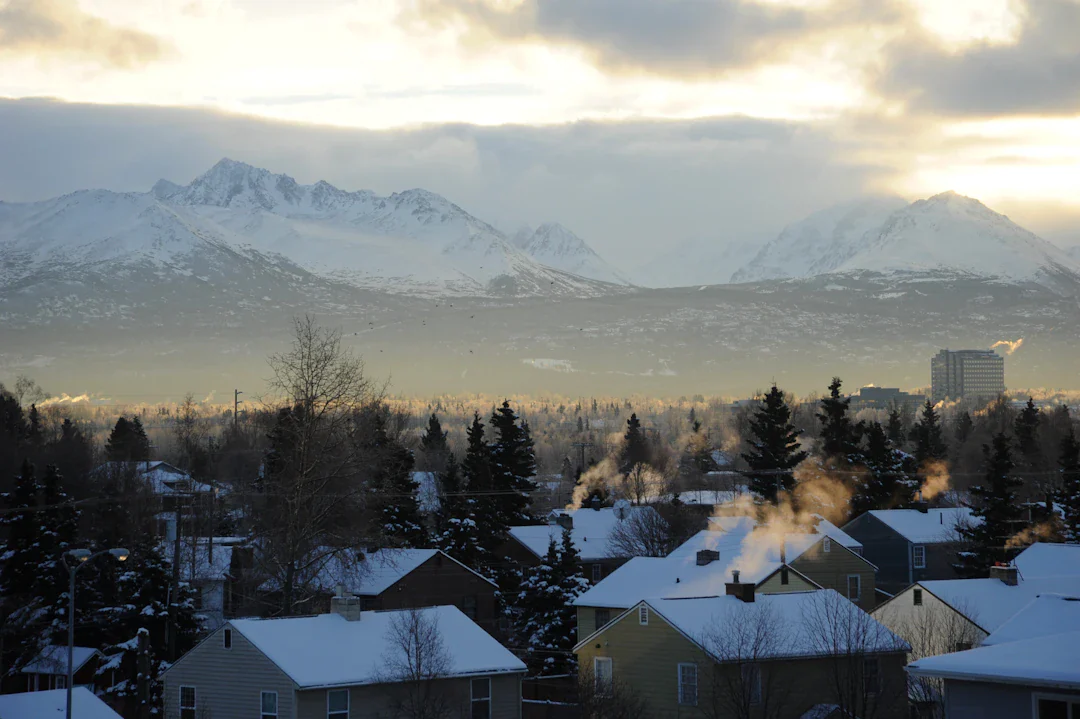
Steady renters. Tenant demand is strong year-round and turnover is low. On top of that, there's a steady cycle of troops coming in to Joint Base Elmendorf-Richardson who need a place to live.
Plenty of 2 to 4 unit buildings. Multifamily is really a regional thing, and Anchorage is good on this. You'll find duplexes, triplexes and fourplexes all over town. Prefer cheaper doors? The Mat-Su Valley often has lower prices per unit.
Military buyers and renters. With Joint Base Elmendorf-Richardson in town, VA buyers can start with zero down, and my JBER VA loan guide walks through the fourplex play for service members.
No state income tax. Alaska doesn't tax your wages or your rental income at the state level, so more of what the buildings earn stays with you.
Winter is a line item, not a deal breaker. Budget for snow removal, heat and seasonal maintenance up front and it's business as usual.
questions
scaling questions people ask me
Real questions from Anchorage buyers and investors, answered.
Can I afford a multifamily on one income?
Often easier than you'd think. It can be easier to qualify for a fourplex than a single-family home, because the lender adds the expected rent from the other units to your income. Someone who doesn't qualify for a $400K house can qualify for a $600K fourplex.
Should I start with a duplex or a fourplex?
There's no wrong answer. A duplex is a smaller first bite. It won't cover the whole mortgage, but your monthly cost still comes in below what you'd pay for a house. A fourplex has three units of rent working for you and can get close to covering the whole payment.
Will the rents actually cover my payment?
Every deal is a little different. The goal is to pay as little of your own mortgage as possible. We run the rents against the full payment before you make an offer, so you know your real number going in.
I've never been a landlord. Is this too big a jump?
I still get butterflies on every purchase, and I think that's healthy. Your tenants are built-in neighbors who happen to pay most of your mortgage. A good lease protects both of you, and a team that has done this exact move before makes the first one feel normal.
How long do I have to live there before I can do it again?
Plan on 12 months in the building. Around month 11, we get you pre-approved for the next one, so you can move at month 12 and keep the ladder moving.
Can I count rent from the place I'm moving out of?
Yes. Lenders call it departing-residence rent, and it can help you qualify for the next building. The rules recently got easier, so you don't always need a signed lease and deposit up front.
How should I pick my first unit so I can keep scaling?
Start small in the unit you live in. A smaller unit for you means more rent from the others and an easier move up the next time. Each round, step up.
Is a VA loan really zero out of pocket?
The down payment is zero. Sometimes there's a small out-of-pocket amount to cover closing costs, and on the right deal those can be negotiated onto the seller.
Should I wait for rates to come down?
When rates drop, you refinance. But you have to own something in order to refinance it. A slower market also means less competition for the buildings you want. The real estate train keeps moving. The sooner you hop on, the further it carries you.
Should I sell a rental to fund the next one?
I treat selling as a one-way door. You can always sell later, but you can't buy back the years of rent, paydown and appreciation. Pull equity with a HELOC or a cash-out refinance, buy the next building, and keep both.
Can I get a HELOC on a rental property?
Yes. We offer HELOCs even on investment properties. A HELOC on a building you already own is one of the cleanest ways to fund your next down payment. See the Alaska HELOC guide.
Will a DSCR loan affect my regular mortgage?
No. A DSCR loan won't affect your regular mortgage. A DSCR lender cares how the building performs.
Do I need 6 months of reserves for my second property?
Not always. Some programs ask for reserves and some don't, and the automated underwriting decides for your file. Don't let a blanket worst-case number from another lender stop you. Let us run your actual scenario.
Does my side business count as income?
A side business is really only counted after 2 consecutive years of tax returns. Until then, lenders qualify you on your other income.
How fast can I get started?
The application takes about 10 minutes. If you're in there longer than that, you're overthinking it. Send a few documents and you can know your number the next day. It costs you nothing and tells you everything.

Who is Slavik Lund?
I'm an Anchorage mortgage broker (NMLS #2054568) with First Rate Financial and a real estate investor. I help people build rental portfolios that buy back their time, one building at a time.
ask a question
wondering what your next building looks like?
Send it over, we're happy to help.
Book a callcall or text 907-917-5259 text me
Sources
- FHA 2 to 4 unit rules, including the 3 to 4 unit rent test (self-sufficiency): HUD Single Family Housing Policy Handbook 4000.1, hud.gov
- Conventional 5% down on owner-occupied 2 to 4 unit homes and counting rental income: Fannie Mae Selling Guide, selling-guide.fanniemae.com
- VA home loans on up to four units with owner occupancy: U.S. Department of Veterans Affairs, va.gov
- 1031 like-kind exchanges: IRS, irs.gov
This guide is general education, not a commitment to lend. Loan programs, guidelines and terms change and depend on your situation.